
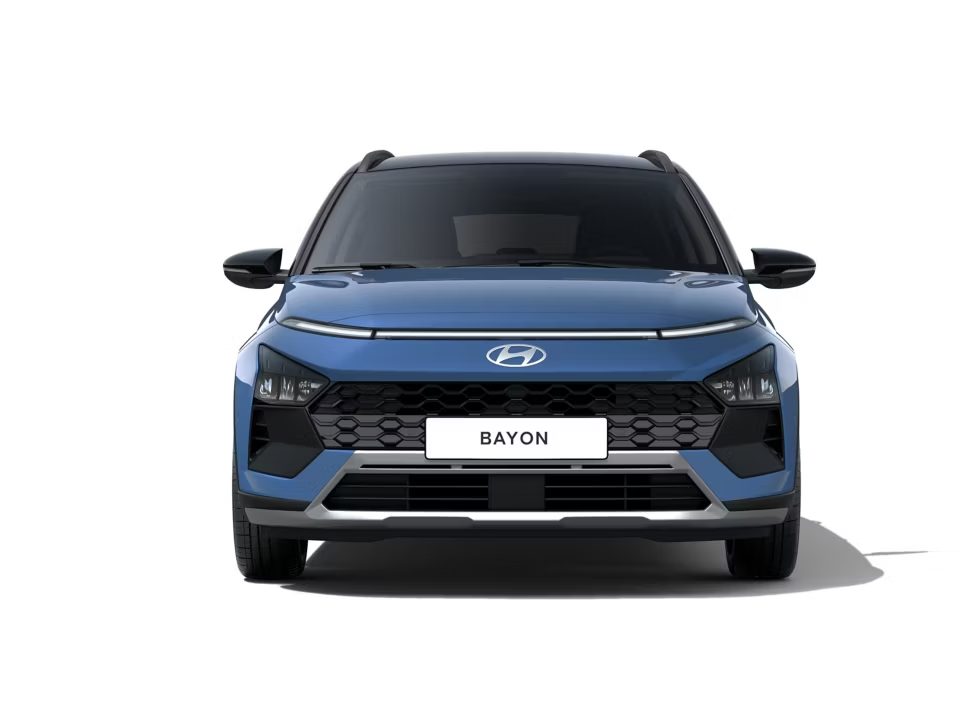
Let’s be real. When a carmaker describes a new SUV as an “Intelligent Utility Vehicle,” the first thing that comes to mind is an eye-roll. Mine did too, especially when every other car company keeps trying to convince us that any old set of wheels with a touchscreen is “smart,” “connected” or “AI,” whatever that’s meant to mean. And yet, after going through what Hyundai has done with the new Bayon, I have to admit, maybe this one really is.
The Bayon lands in India on 26 October 2026, and bookings are already open at Hyundai dealerships and on hyundai.co.in for a token ₹11,000. Deliveries kick off during the festive season which, let’s face it, is exactly when half the country wanders into a showroom anyway. Clever timing. But is the car itself as clever? Let’s find out.
Design and Positioning: Filling a Gap You Didn’t Know Was There
Here’s the interesting bit. The Bayon is 4.2 metres (4,200mm) long. That’s not an everyday place for an SUV to sit, and honestly, it’s a rather shrewd one. It’s a touch bigger than the sub-4-metre brigade, the Venue and the Kia Sonet of this world, yet it stays below the Creta in Hyundai’s own line-up.
Why does that matter so much? Well, for years now Indian buyers have been stuck with an awkward choice. Either you buy a compact SUV that’s been squeezed under the four-metre mark, with all the compromises that brings, or you stretch your wallet to a bigger, pricier midsize SUV like the Creta. The Bayon just slots straight into that gap.
Think of it as the family SUV for when your Venue isn’t enough anymore, but you’re not ready to shell out Creta money just yet. Or for the young professional who wants a bit more road presence without going all-in. I reckon plenty of people fit that description. I know a few of them myself, and they’ve been grumbling about this exact problem over chai for a good while now.
None of this will win over someone who just wants a bigger car, of course. Hyundai is talking smarts and technology here, and that’s where things get genuinely interesting.
Pricing and Variants: Expected, Not Confirmed (Yet)
A quick but important disclaimer first: Hyundai hasn’t announced official pricing. That comes on launch day, 26 October. So treat every figure below as an estimate.
Going by the reports doing the rounds, the Bayon should cost somewhere between roughly ₹10.21 lakh and ₹16.32 lakh (ex-showroom). Autocar India, meanwhile, pegs the range at ₹10.59 lakh for the base manual and ₹17.29 lakh for the top IVT automatic, also ex-showroom.
If Hyundai lands close to those numbers, the Bayon ends up brushing against the upper variants of the sub-4-metre SUVs and the lower variants of the midsize lot. That’s a bold spot to occupy. Get the price right and it could pull buyers from both ends. Pitch it a little too high, though, and people will simply ask, “Why not just get the Creta?” No pressure, Hyundai.
Engine and Performance: Simple, Sensible, Familiar
Under the bonnet, there’s no drama, and I mean that as a compliment. The Bayon uses a 1.5-litre MPi four-cylinder naturally aspirated petrol engine, good for 115 PS (84.4 kW) and 144 Nm of torque.
You get two gearbox choices: a 6-speed manual, or Hyundai’s Intelligent Variable Transmission (IVT), which is its CVT-style automatic.
Some purists will grumble about the lack of a turbo-petrol. I get it, a little turbocharged shove is always fun on paper. But a naturally aspirated 1.5 is perfectly fine for Indian roads. It’s smooth and linear in stop-start city traffic, and it rarely makes you worry about long-term reliability. For a car built around families and daily commuters, that’s a sensible call.
The IVT is probably the one to pick for city life. Anyone who’s crawled through the sea of traffic at Bengaluru’s Silk Board junction, or along Mumbai’s Western Express Highway, will know exactly why. The manual, on the other hand, suits those who still enjoy being properly involved with the drive, and anyone keeping a close watch on the budget.
Will it set your hair on fire? No. Is it supposed to? Not in the slightest. The real showstopper sits elsewhere.
The Standout: AI and Tech That Actually Sounds Useful
This is where the Bayon really tries to pull ahead, and where it gets interesting.
It’s the first Hyundai to get the brand’s Generative AI Voice Assistant, which pairs “Intelligence by Perplexity” with Voice AI powered by SoundHound AI. In plain terms, you should be able to talk to the car the way you’d talk to a colleague or a friend, and get a natural answer back, instead of barking stiff commands and hoping something sticks. If it lives up to the billing, it’s a huge step up from the clunky voice systems most of us have learned to tune out.
What really caught my eye, though, is how local it all feels. With more than 500 offline voice commands built in, the Bayon understands English, Hindi, Hinglish, Tamil, Bengali and Telugu. Offline is the key word. Anyone who’s driven a highway through a dead-network stretch knows how quickly “connected” features become disconnected ones. And Hinglish support? That’s a genuinely thoughtful touch, because almost nobody actually speaks pure English or pure Hindi in daily life.
The interface itself supports 10 regional languages and 2 international ones, another sign Hyundai is looking well beyond the big metros.
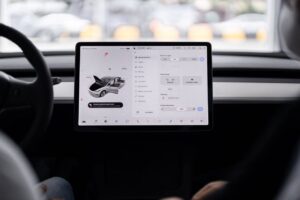
Running the show is the Connected Car Navigation Cockpit (ccNC), accelerated by NVIDIA and displayed across dual 12.3-inch (62.5cm) curved panoramic screens that should lend the dash a properly premium, modern air.
Then there’s the software side. The Bayon handles Over-the-Air (C-OTA) updates for up to 19 controllers, which means it can, in theory, get better over time without a trip to the service centre. We’ve grown used to that on premium and electric cars, so seeing it at this price point is a real talking point.
And finally, Hyundai Bluelink brings over 70 connected features. Bluelink is nothing new, but plenty of Hyundai owners already swear by the remote tricks on their phones.
Features and Comfort: The Cabin Is the Pitch
Pull all of that together and the cabin becomes the Bayon’s main selling point. Twin curved displays, a generative AI assistant, multilingual voice control and OTA updates add up to a car designed to feel current every single time you climb in.
I’ll stay cautious, though. Hyundai has leaned hard on the tech in its announcements, so we’ll need the full variant-wise feature list at launch to know exactly what lands at each price. My hunch? The really clever kit will sit in the top trims, as it usually does. Keep that in mind before a glossy brochure sweeps you off your feet, because the base model’s list may be shorter than you’d like.
Who Is It For, and What Are the Rivals?
The Bayon doesn’t have a neat one-to-one rival, and that’s rather the point. It’s a little bigger than sub-4m SUVs like the Kia Sonet and Hyundai Venue, yet it slots under the Creta.
So it’s roomier than the small SUVs and far more tech-focused, while staying more affordable than the Creta. Who’s it for, then? Tech-minded buyers, families stepping up from a hatchback or compact SUV, and anyone chasing a generous feature list without midsize money.
If outright performance is your thing, a turbo or diesel engine is what you’ll want, and you’ll have to look elsewhere. But if a sensible engine wrapped in a seriously high-tech package appeals, the Bayon makes a strong case.

Verdict: Hyundai’s Smartest Bet in a While?
The Hyundai Bayon feels like a genuinely well-thought-out product. It isn’t trying to reinvent the engine bay; it’s plugging a real gap in the market and backing it with tech that could actually prove useful to Indian drivers, those multilingual, offline voice commands especially.
The big question mark, as ever, is pricing. Nail it on 26 October and Hyundai could have another hit on its hands. Miss it, and the Creta and Venue will happily keep stealing its thunder from the same showroom floor.
Either way, I can’t wait to get behind the wheel and see whether this “Intelligent Utility Vehicle” is as clever on the road as it looks on paper.
Pros
- Smart 4.2m positioning between sub-4m SUVs and the Creta
- Hyundai’s first Generative AI Voice Assistant
- 500+ offline voice commands, including Hinglish and regional languages
- Dual 12.3-inch curved displays and C-OTA updates for up to 19 controllers
- Proven, simple 1.5-litre NA petrol with both manual and IVT options
Cons
- No turbo-petrol or diesel option for enthusiasts
- Official pricing not yet announced; could spark a price clash with the Creta and Venue
- Full variant-wise feature distribution still to be confirmed
AutoGL Rating: 8.2/10
Honestly clever, and a true tech-first SUV that meets a real need. In the end, the price will decide whether it’s a good buy or a great one.